



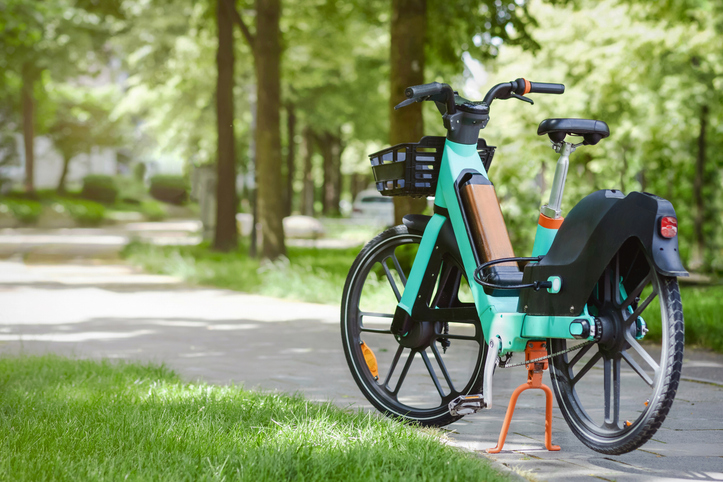
Electric rides have reshaped how local commuters get around, and cities are racing to write rules for them
E-bike adoption is trending up across Northeast Ohio this year. Driveways from Macedonia to Sagamore Hills now regularly include a charging cable next to the family cars. Local shops report steady interest from commuters, retirees and teenagers alike, and several area councils are working through what the fast growth actually means for streets, sidewalks and enforcement.
A Longer History Than You Might Think
Mopeds and scooters both have roots that go back much further than the electric versions on local roads today.












Mopeds Trace Back to Postwar Europe
The basic idea, a bicycle fitted with a small helper motor, dates to the early 1900s, but the word moped itself came later. It is a Swedish blend of motor and pedal, coined in the late 1940s. The first true production mopeds followed close behind. Builders across Sweden, France, Germany and Italy turned out lightweight bikes with small engines through the late 1940s and into the 1950s, aimed at people who needed cheap transportation after the war.
Mopeds did not become a mainstream American product until much later. The 1973 oil crisis changed that almost overnight. Gas prices spiked, and a vehicle that could travel roughly 100 miles on a gallon suddenly looked appealing to a lot of households. Brands including Puch, Motobecane, Sears and Honda sold well through the mid to late 1970s and into the early 1980s, often to teenagers who could ride without a license under the rules of that era. Interest cooled by the mid 1980s as fuel prices dropped and cheap used cars became easier for young drivers to find, but mopeds never fully disappeared from American roads.










Scooters Started With a False Start, Then Took Off
Motor scooters actually have two separate beginnings. The first true motor scooter was the Autoped, built in New York starting in 1915. Riders stood the whole time, since it had no seat, just a small gas engine bolted onto a stand up frame. It sold for about a decade before interest faded. An American company called Salsbury introduced a seated, step through scooter in the 1930s that looked closer to a modern design, but it stayed a niche product.
The real breakthrough came out of Italy right after World War Two. Piaggio, an aircraft manufacturer that needed a new product once wartime demand dried up, launched the Vespa in 1946. Its enclosed engine and step through frame let riders stay clean in regular clothes, a detail that mattered to postwar commuters without a garage full of riding gear. Lambretta launched a competing design the following year. Europe’s shortage of money and fuel created the same conditions that later fueled the American moped boom, and scooters spread quickly across the continent before becoming a fixture of pop culture through the 1950s and 1960s.
Electric Versions Arrived Once Batteries Caught Up
Electric bicycles are not new either. Early patents for motorized bikes date back more than a century, but battery technology held the category back for decades. Lithium ion batteries changed that equation. Lighter, more powerful cells arrived in consumer products through the 2010s, and bike makers took notice. Suddenly a bicycle could carry a motor and battery without becoming impossible to pedal or too heavy to lift onto a rack.
Scooters followed a similar arc. Folding kick scooters got a battery boost, and shared scooter fleets began appearing in larger cities before spreading to suburban downtowns. Mopeds, meanwhile, kept their gas engine roots longer, but electric moped style vehicles now compete directly with traditional models on price and upkeep. Together these three categories fall under the umbrella term micromobility, which industry watchers use to describe small, often electric vehicles built for short trips rather than highway travel.
How Some Communities Are Responding
State law sets the baseline for e-bikes, but it leaves plenty of gaps for local officials to fill, and several Northeast Ohio communities are working through those gaps right now.
Ravenna’s Streets and Sidewalks Committee reopened e bike discussion at an August 10 meeting chaired by Council Member Matt Harper, who distributed a bike class guide from the Parma Police Department. Police Chief Jake Smallfield told the committee that no state law specifically addresses Class 1 or Class 2 e-bikes, so enforcement falls to local ordinances. He said a citywide helmet requirement would give officers a clearer visual cue, since it is often hard to tell from a distance whether a rider is pedaling or relying on the motor. The committee agreed to move a helmet requirement forward while it keeps researching a broader ordinance covering mini bikes, electric dirt bikes and golf carts.
Jefferson Village Council heard a similar warning earlier in August. Elaine Lux, a retired pediatric and emergency room nurse, told council she grew concerned watching riders after the Fourth of July parade featured many golf carts, ATVs and e bikes. She described a young child riding unrestrained on a four wheeler and said she wants the village to publicize traffic rules again. “The point is the adults are not being examples for these kids that are on the bikes and the e bikes,” Lux told council. Police Chief Christopher Mackensen said his department is drafting a public post explaining the rules and developing a proposed 2027 inspection program that would issue a sticker once a rider and vehicle pass review.
Hudson is taking a broader look at low speed vehicles, which include under speed vehicles, utility vehicles and mini trucks alongside e-bikes and scooters. Council members Samantha D’Eramo and Dan White announced a public forum to gather resident input specifically on e bikes and scooters. Police Chief Perry Tabak told council that a 2025 state law change now requires cities to explicitly authorize these vehicle categories rather than allowing them by default, and he said inspection requests and calls have increased sharply since Hudson’s original ordinance passed. Proposed updates would bar under speed vehicles from public roads entirely, cap low speed vehicles to streets with a 25 mile per hour limit and restrict utility vehicles and mini trucks to roads posted at 35 miles per hour or below.
What Ohio Law Actually Says
Ohio recognizes a three class system for electric bicycles, and understanding the differences matters before buying one. A Class 1 electric bicycle has fully operable pedals and a motor of less than 750 watts that only assists while the rider is pedaling and stops assisting once the bike reaches 20 miles per hour. Class 2 e-bikes can use motor power whether or not the rider is pedaling, and Class 3 bikes are pedal assist models capable of up to 28 miles per hour.
The class also determines where a bike can legally go. Class 1 and Class 2 e-bikes may generally use bike paths and shared use paths unless a local rule restricts them, while Class 3 bikes are limited to paths that run alongside a road or where they are specifically approved. Helmets are required only for Class 3 riders and their passengers, regardless of age. No Ohio e-bike class requires a driver’s license, registration or insurance, since compliant e-bikes are treated more like traditional bicycles than motor vehicles under state law.
Why Local Riders Are Buying In
Cost plays a role in the shift. A tank of gas now buys a fraction of the miles it used to, and an electric bike or moped can handle a short commute for pennies on the dollar. Terrain matters too. Northeast Ohio has plenty of hills, and pedal assist motors flatten out routes that would otherwise discourage casual riders from leaving the car at home.
Local retailers describe a customer base that spans generations. Younger riders often start with scooters for short hops around town, while older riders tend to gravitate toward pedal assist bikes that ease strain on joints. Mopeds still draw commuters who want more range and speed than a bicycle but do not want the cost of a car payment.
Gas mopeds have not faded the way some expected. Rising battery costs, instant refueling and ranges over 100 miles have kept gas models appealing, and riders drawn to retro styling and engine feel remain a steady part of that market. Electric bikes are the category actually pulling new riders away from mopeds, largely because e-bikes require no license, registration or insurance in most states, while mopeds typically do.
FAQs
What is the difference between a Class 1, Class 2 and Class 3 e-bike in Ohio? Class 1 bikes only assist while pedaling and stop at 20 miles per hour. Class 2 bikes can use motor power without pedaling. Class 3 bikes are pedal assist and can reach 28 miles per hour.
Do I need a license to ride an e-bike in Ohio? No. A properly classified e-bike does not require a driver’s license, registration or insurance in Ohio.
Is a helmet required to ride an e-bike in Ohio? Only Class 3 riders and passengers must wear a helmet statewide.
When did mopeds first become popular in the United States? Mopeds existed earlier, but they became a mainstream American product after the 1973 oil crisis, when their fuel efficiency made them appealing amid rising gas prices. Sales stayed strong through the late 1970s before cooling in the mid 1980s.
When was the first motor scooter invented? The first true motor scooter was the Autoped, built in New York starting in 1915. The design that shaped modern scooters, the Vespa, arrived later, launched by Piaggio in Italy in 1946.
Learn more: https://amzn.to/4xm6EnX
