



Starting a business in Northeast Ohio? Get started here.
You may focus on how your home looks when a buyer walks through the front door. But the real first showing often happens on a phone screen, before a buyer ever sets foot in your neighborhood. The photos are the showing.
I see this every week with listings in Lakewood, Solon, Hudson, and across Northeast Ohio. Buyers scroll, decide in seconds, and only tour the handful of homes whose photos made the space feel real. Virtual staging is one of the tools I use to get a seller into that handful. It can also backfire badly when it promises something the house cannot deliver, so here is how I explain it to sellers, and how to use it without creating a problem.









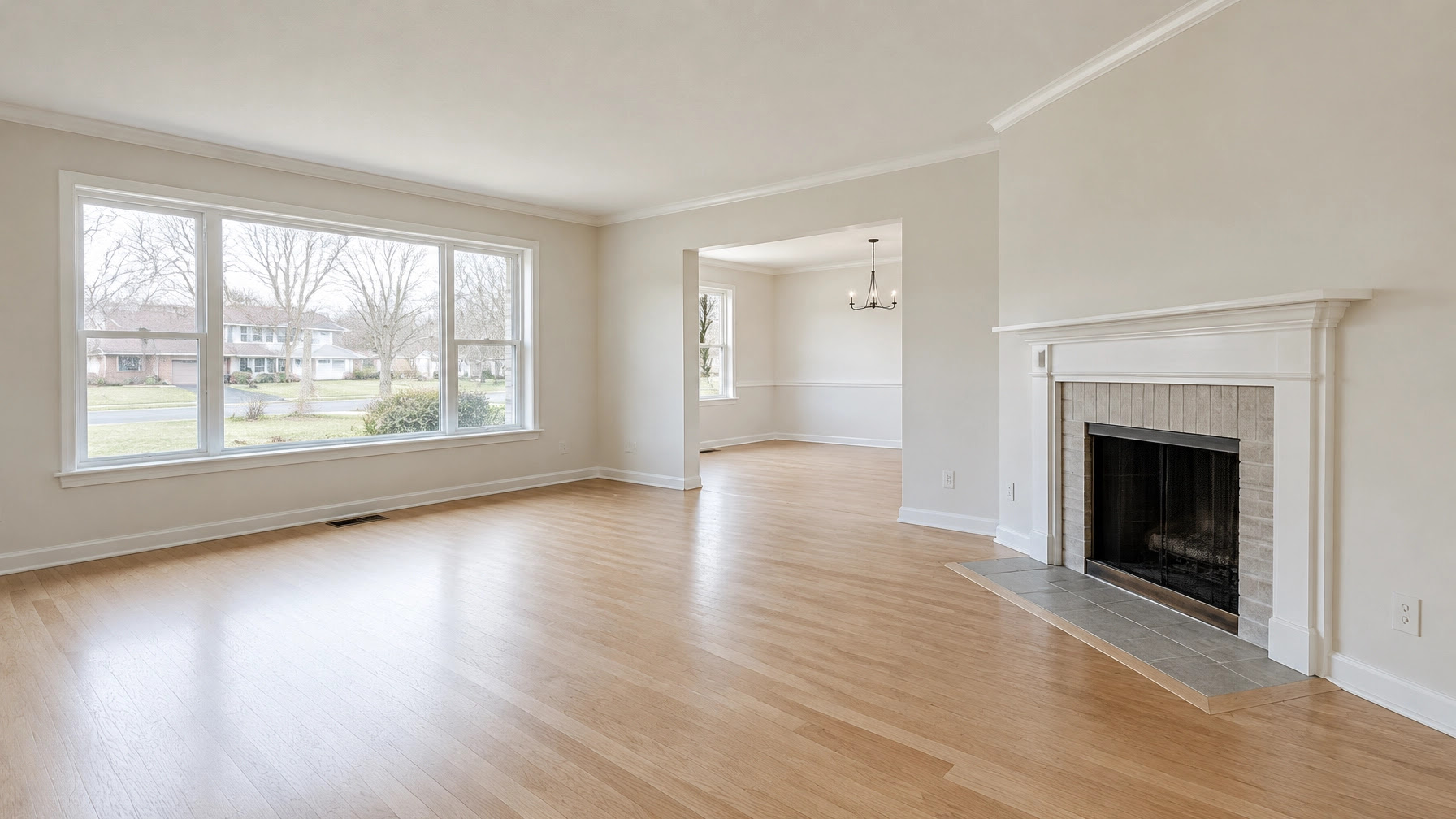
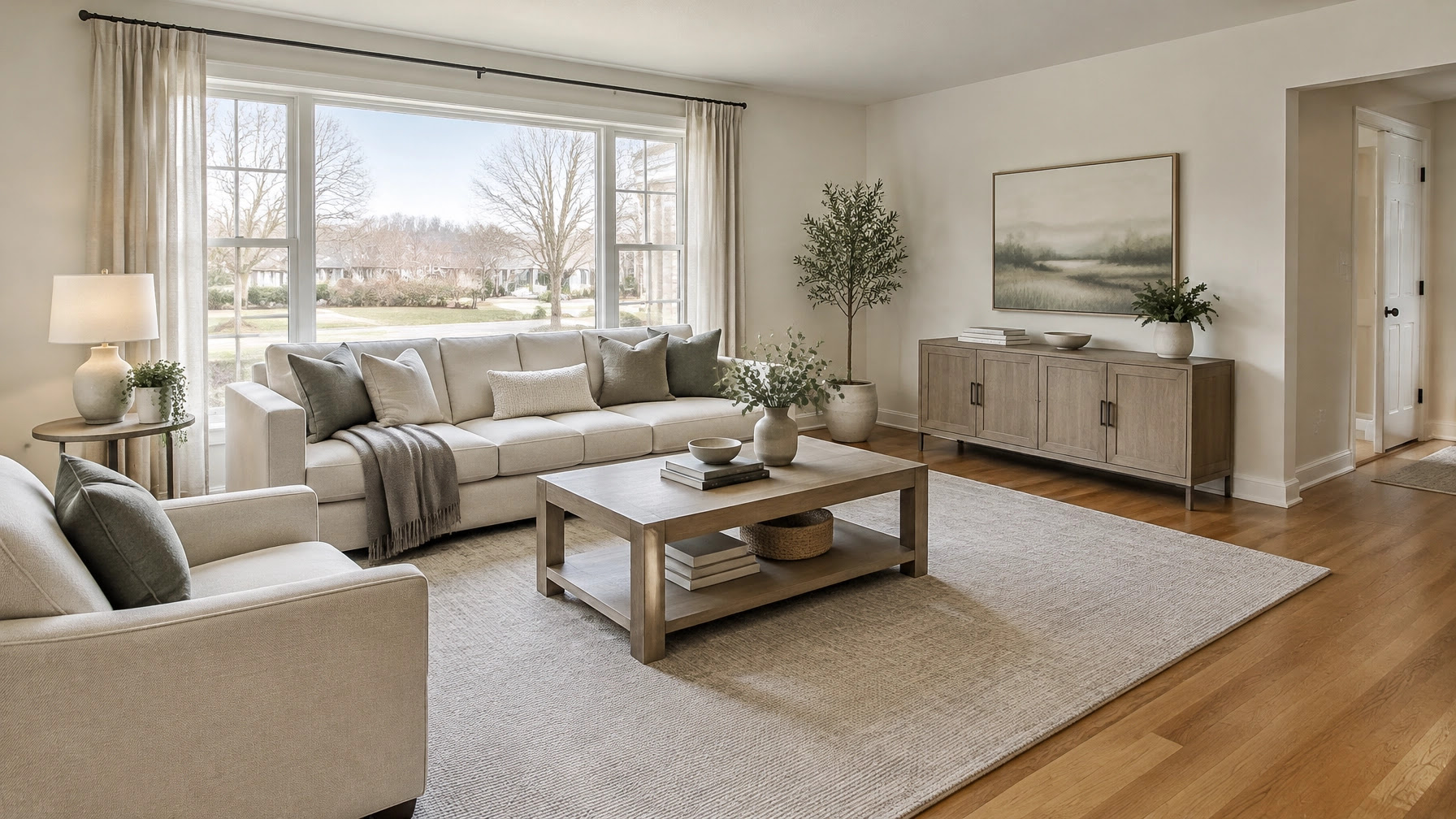
Virtual staging turns a listing photo into a furnished-room preview
Virtual staging is a digital edit to a photograph. A designer or software adds computer-generated furniture and décor to a photo of an empty room. Some services can also digitally declutter or update a room’s appearance.
The goal is to show buyers one possible use for the space: a living room with a sofa and rug, for example, or a bedroom with a bed and nightstands. The image offers a visual reference, not a preview of furniture included with the home.










The room itself does not change. It is a photo edit, not furniture placed in your house. Buyers who visit in person will see the actual room, empty or otherwise.
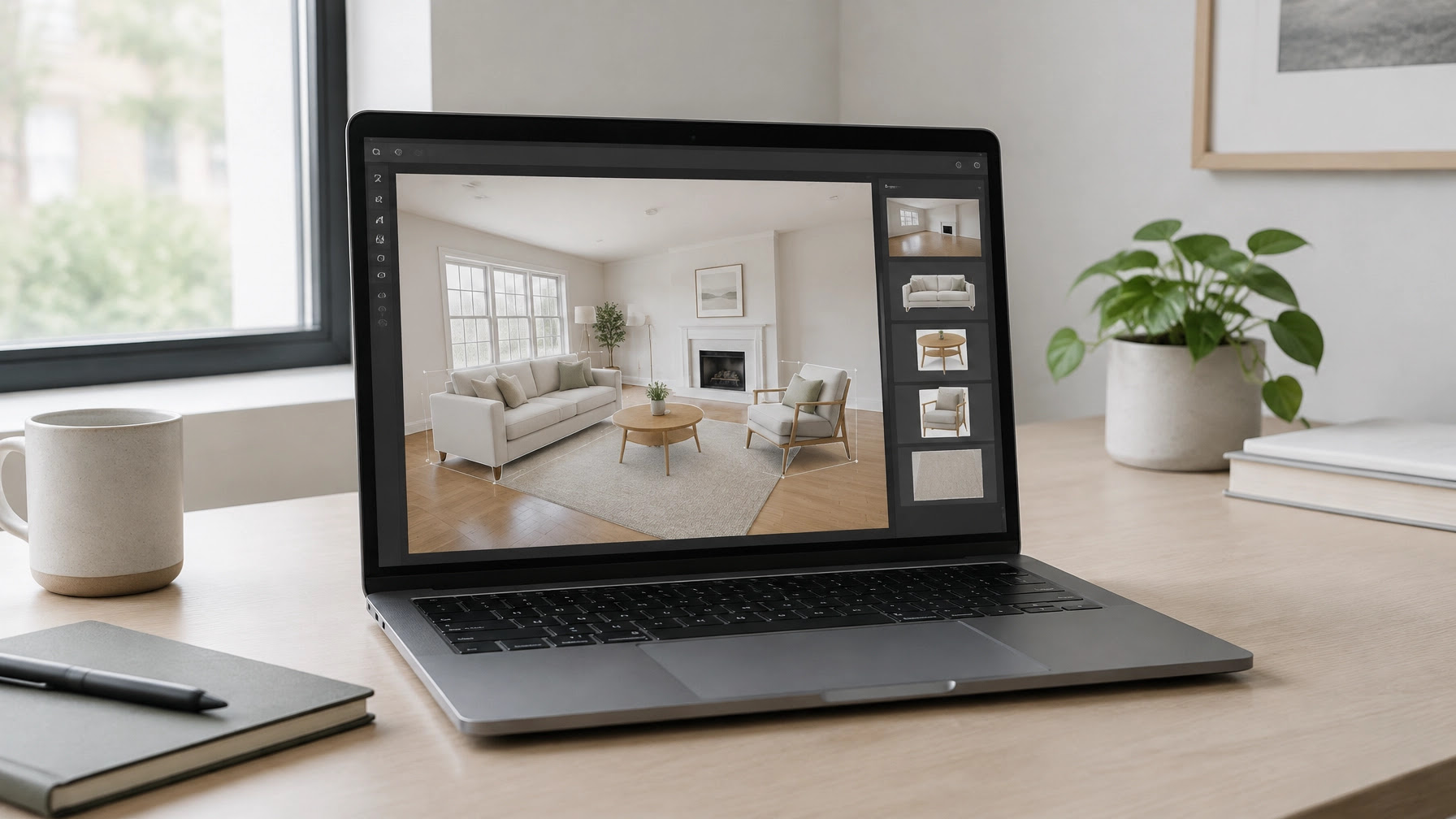
Virtual staging does not repair or remodel a home
Virtual staging is a presentation tool, not a fix for a home’s condition. It is not a substitute for cleaning, decluttering, or making needed repairs. It should not be used to hide water stains, cracks, damaged flooring, or other defects.
It is also not a renovation rendering. Adding furniture is different from digitally showing new cabinets, wider windows, or a renovated kitchen that does not exist. If an image makes a buyer believe the home has features or a condition it does not have, the edit has gone too far.
If you are still weighing whether to stage at all, my guide on whether to stage your home before selling covers that decision. This article is about the digital option and the listing-photo side of the sale.
The financial case is about what physical staging keeps costing you
Virtual staging isn’t free, but the comparison to physical staging isn’t close, and the reason is structural rather than a matter of shopping around. When I price out both options for a seller, the difference almost never comes down to which vendor is cheaper.
Physical staging means furniture rental, delivery, setup, and eventually removal. It also usually means paying for that furniture every month for as long as the home sits on the market. In a slower market like this one, where homes are taking longer to sell, that monthly clock keeps running whether or not the right buyer shows up. If you still live in the home, you may also be paying for storage for the pieces that got moved out to make room.
Virtual staging is a one-time edit per photograph. There is no furniture to rent, nothing to deliver, no monthly charge, and nothing to collect when the listing ends. It also works on a vacant home, which is exactly where physical staging costs the most, because there is nothing in the house to work with and every piece has to be brought in.
You usually don’t need every listing photo staged. A handful of key rooms is often enough: the main living area, primary bedroom, and dining or kitchen area. That keeps the project small, the approval process quick, and the budget predictable from the start rather than dependent on how many weeks the home takes to sell.
Strong listing photos help buyers decide what to tour
Many buyers begin their search online and use listing photos to narrow down which homes deserve an in-person visit. An empty room can photograph as smaller and colder than it feels in person. It also gives buyers little help judging scale: Will a sectional fit? Is there room for a dining table? Where might a bed go?
Virtual staging gives buyers a frame of reference. It can make the room’s possible layout easier to understand, especially when the home is vacant. The NAR’s 2025 staging report found that 83% of buyers’ agents said staging made it easier for buyers to visualize a property as their future home. That finding covers staging overall, not virtual staging specifically, but it points to the value of helping buyers imagine how a space could work.
Good images also matter in search results and social promotion, where a photo has only a moment to catch someone’s attention. This doesn’t guarantee more views or a higher offer. It can, however, help buyers understand why a home is worth considering. For people relocating from out of state, including buyers considering a move to Northeast Ohio, photos may carry even more weight before they can visit.
The biggest risk is a buyer feeling misled
A buyer who sees a furnished room online and walks into an empty or dated one may feel the listing oversold the home. That reaction can color the rest of the showing. An edit can also make a room appear larger than it is, even without changing its dimensions.
The answer is disclosure and restraint. Label staged images clearly and choose furniture that helps explain the room without exaggerating its size or condition. If the room is unusually narrow, for instance, avoid filling it with tiny furniture that makes it seem generous.
Virtual staging should clarify what a room could do, not disguise what it is.
Follow the local rules and label every staged image
There is no single national MLS rule for virtual staging. Requirements vary by MLS and local board. Some require a disclosure on the photo itself; others may also require a note in the listing description or retention of the original, unaltered image. Some MLSs require the original image to be uploaded alongside the edited version.
Here in Northeast Ohio, our MLS is MLS Now, and its current image and virtual staging rules apply to every listing I take. They require altered and virtually staged images to carry a readable on-image disclosure, with the disclosure repeated in the photo caption or description. The original must be retained and provided to MLS Now upon request. I keep every original on file for exactly that reason.
Our professional standards point the same way. The NAR Code of Ethics says advertising must present a “true picture,” and Standard of Practice 12-10 specifically addresses misleading images. You can read the 2026 NAR Code of Ethics yourself. When there is any doubt, I label the image and keep the original.
A vacant Northeast Ohio listing shows what changes in the showing
Picture a vacant three-bedroom home in a Northeast Ohio suburb, listed after a relocation. The living room, primary bedroom, and dining area are empty, so buyers browsing online have a hard time picturing how the spaces connect and function.
That is the listing where I would order virtual staging for six key photos across those rooms. The images get labeled, and I keep the unaltered originals on file.
When buyers arrive, they already have a sense of where a sofa or a dining table might go. The conversation shifts from trying to imagine the room to asking practical questions about dimensions and furniture fit. That is a real improvement in a showing, and I would rather have it than not. It is not a promise of more showings or a faster sale, though. Price, condition, location, and the rest of the marketing plan still do the heavy lifting.
Match the staging method to the home
Virtual staging is often a good fit for vacant homes, including properties being sold after an owner has relocated. It can also help when buyers need a visual cue to understand a room’s scale or purpose.
If you still live in the home and it feels cluttered or dated, start with cleaning and decluttering. Digital furniture in a photo won’t resolve what buyers see during the actual visit. For higher-priced homes or luxury listings, real staging, or a combination of physical preparation and selective virtual staging, may better match buyer expectations. And if the home has a genuine condition issue, address it or represent it honestly. Editing it out is not a staging strategy.
Questions worth asking before any images get ordered
When a seller wants to be involved in the choice, these are the questions I walk through with them:
- Who owns the finished images, and can they be used in the listing and later marketing?
- How many revisions are included?
- Will the vendor supply the original, unaltered photos for compliance?
- How are the staged images labeled?
- Can the rooms be furnished in a consistent style, so the home reads as one property rather than a catalog of unrelated rooms?
Virtual staging checklist
- Select a few important rooms, not every listing photo.
- Use edits to clarify layout, not to hide flaws or imply renovations.
- Keep furniture and room proportions realistic.
- Label every virtually staged image and confirm local MLS requirements.
- Retain the original photos and review the final images with your agent.
If you are preparing to sell and want a straight answer on whether virtual staging makes sense for your home, get in touch and I will walk you through it.
Content provided by:
Carly Sablotny
Team Leader at Milestone Property Group | KW Living
440-521-1704 carlysablotnyrealtor@gmail.com http://www.neohomepros.com/
