


Part 1 of Our Holiday Scam Series: Fake Stores, Missed Delivery Texts and Phony Charities
The holiday deals are rolling in, and so are the scams. Ohioans lost more than $300 million to fraud in 2025, according to Federal Trade Commission data cited by Chase.
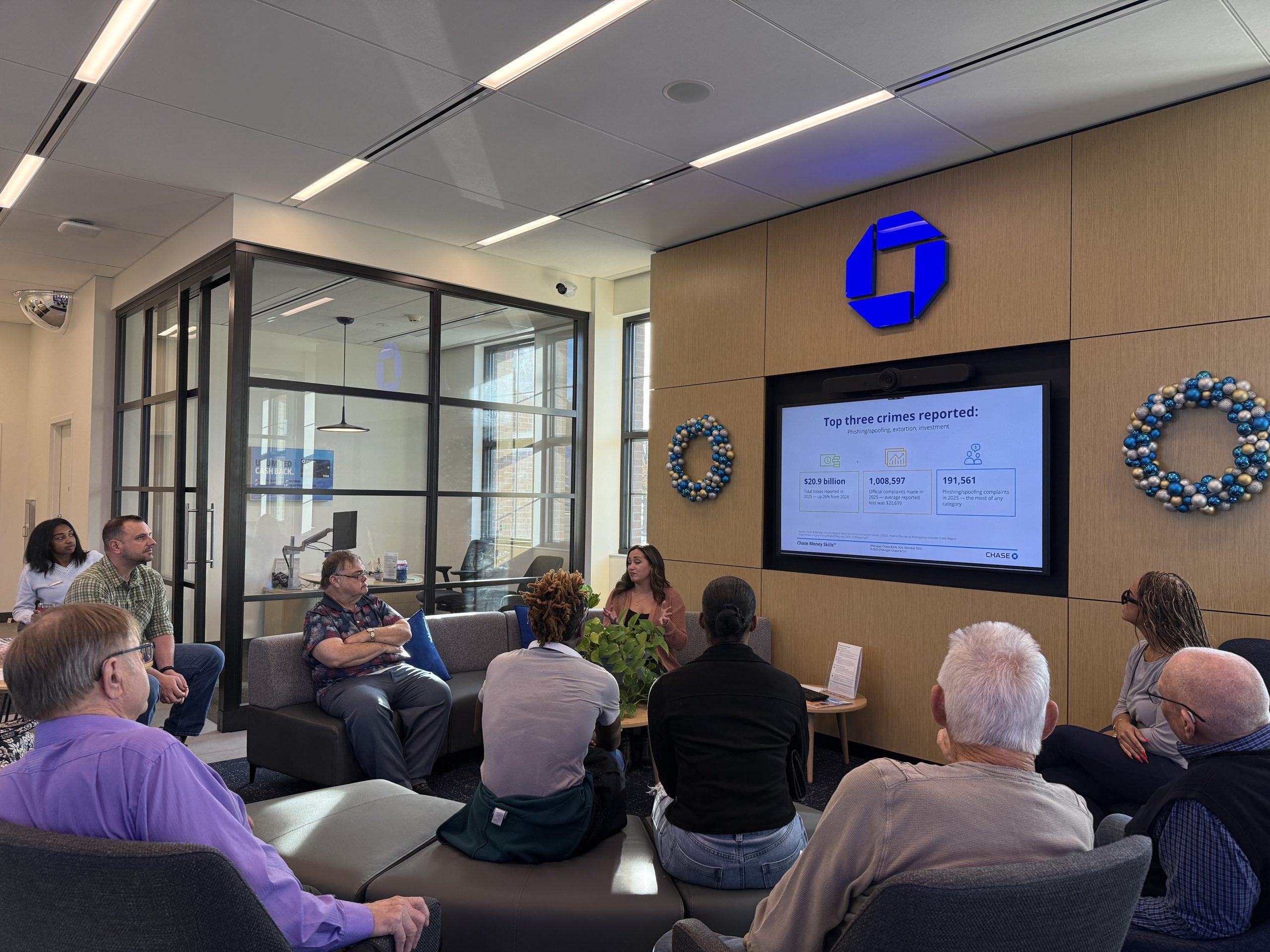
Chase and the Summit County Sheriff’s Office teamed up on Nov. 19 to help local shoppers stay a step ahead. They hosted a free scam prevention workshop at the Chase branch on Golden Link Boulevard in Northfield. Teresa Morales-Bargar, Chase’s Cleveland community manager, and Detective Joseph Krupla of the Summit County Sheriff’s Office led the session. Attendees learned how to spot current scams and asked their own questions in a live Q&A.
The workshop was part of Chase Fraud & Scam Prevention Month. The nationwide effort brought free workshops to communities in the lower 48 states throughout November. Chase says it hosts more than 1,000 of these workshops each year.











This is the first story in a holiday series NordoniaHills.News is running with help from Chase and the sheriff’s office. Below are three common holiday scams from a tip sheet Chase shared with us.
Online Shopping Scams
Scammers build fake online stores or pose as sellers on social media. The products they offer either don’t exist or aren’t what was advertised.










Red flags:
- Website addresses with misspellings
- Deals that seem too good to be true
- Sellers who want payment up front
How to stay safe:
- Check every URL for typos before you buy.
- Stick with retailers you know and trust.
- Pay with a method that offers protection, such as a credit card.
Missed Delivery Scams
With so many packages on the move, fake delivery alerts are everywhere. These texts and emails claim you missed a package or that there’s a problem with an order. Some arrive even when you haven’t ordered anything.
Red flags:
- Messages from unofficial domains
- Pressure to fix a problem right away
- Requests to click a link or pay a fee
How to stay safe:
- Be suspicious of any delivery alert you weren’t expecting.
- Check tracking through the carrier’s official website or app.
- Skip the links in unexpected texts and emails.
Donation Scams
The season of giving is also prime time for fake charities and fundraisers. Scammers count on your generosity.
Red flags:
- Urgent or emotional pleas for money
- Little detail about the cause or how the money will be used
- Requests for gift cards, wire transfers or cryptocurrency
How to stay safe:
- Look up the organization before you give.
- Donate through official websites rather than social media.
- Don’t let a sense of urgency rush your decision.
Slow Down and Verify
Chase’s main advice fits every scam on this list: slow down and verify before you act. If a message feels urgent or a deal seems too good to be true, pause. Then check it through a website, app or phone number you already trust.
Scammers also pretend to be local law enforcement. Earlier this year, the Summit County Sheriff’s Office warned Northfield Center residents about callers using real deputies’ names to demand money. The sheriff’s office does not collect any form of payment over the phone.
Where to Find Help
Chase posts more tips at Chase.com/Security. The Chase Security Center at Chase.com/Security has more tips for spotting red flags and keeping up with the latest scams. It also has pages on safe payments, protecting seniors and reporting fraud. Chase customers can also name a Trusted Contact Person, a trusted adult who can be notified about certain transactions.
What Chase Customers Should Know
Chase says its customers won’t be held responsible for unauthorized credit or debit card charges that are reported promptly. If you spot one, call the number on the back of your card or billing statement right away.
The bank also reimburses unauthorized checking or savings withdrawals made through its online or mobile bill pay and transfer services. Customers need to contact Chase promptly after the transaction first shows up on a statement.
Chase watches credit card activity for fraud around the clock. It may text, email or call you about unusual purchases. If it spots suspicious activity, it may place a temporary hold on the account to make sure it’s really you.
The bank’s advice when you’re unsure is simple. Contact Chase before you share account information or send money, using the number on your card or statement.
Report Scams
If you spot a scam, report it to the FTC at ReportFraud.ftc.gov. You can also read the sheriff’s office’s earlier fraud prevention tips on NordoniaHills.News.
Coming Up in the Series
Next, we’ll look at scams that target older adults and how families can help. Later parts will explain what to do if you’ve been scammed. We’ll also share the trends the sheriff’s office is seeing in Summit County.
FAQs
What are the most common holiday scams?
Chase warns shoppers about three common holiday scams: fake online stores, fake missed delivery alerts and phony charities. All three try to rush you into paying or clicking before you think.
How can I tell if a delivery text is a scam?
Be careful with any delivery alert you weren’t expecting, especially one that asks you to click a link or pay a fee. Check your tracking on the carrier’s official website or app instead.
How much money did Ohioans lose to fraud in 2025?
Ohioans lost more than $300 million to fraud in 2025, according to Federal Trade Commission data cited by Chase.
Will the Summit County Sheriff’s Office ever ask me to pay over the phone?
No. The Summit County Sheriff’s Office does not collect any form of payment over the phone. If someone claiming to be a deputy calls asking for money, hang up and call the sheriff’s office directly.
