




Starting a business in Northeast Ohio? Get started here.
Real estate fraud follows money and momentum. A scammer may try to steal a property by impersonating its owner, divert closing funds by changing wiring instructions, or collect rent for a home they have no authority to lease. The details differ, but the pressure points are often the same: a rushed decision, a trusted-looking email, or a listing that seems just plausible enough.
You can reduce your risk by slowing down and verifying independently. Here’s what Northeast Ohio homeowners, buyers, sellers, and renters should know, and what to do if something feels wrong.












1. Deed fraud and seller impersonation
How the scam works
In a seller-impersonation scheme, a criminal pretends to own a property and contacts a real estate agent to list it for sale. Vacant lots, empty homes, investment properties and homes owned by people who live elsewhere may be especially attractive targets. A fraudster may use stolen or forged identification and documents to make the impersonation look convincing, then attempt to transfer the title and direct the proceeds to an account they control.
Ohio’s Division of Real Estate and Professional Licensing has warned licensees and consumers about fake listings and deed fraud. Ohio REALTORS described the warning and the steps agents are urged to take. The risk also extends beyond a fraudulent sale. An Ohio consumer alert issued in 2025 warned that older adults may be targeted with unsolicited real estate offers, including offers with complex terms. A homeowner should not feel pressured to sign or agree to a sale before getting independent advice.










Who may be targeted, and what to watch for
Scammers may seek out owners of:
- Vacant land or homes that appear unoccupied
- Investment properties or homes managed from out of town
- Inherited property, especially when multiple heirs are involved
- Properties owned by seniors or people who may not be monitoring public records
- Properties with no active mortgage
Warning signs can include a would-be seller who insists on a quick listing, avoids in-person or video verification, gives inconsistent details about the property, or resists involving other owners. Be cautious if the person’s identification, contact details or story don’t line up with county records. A legitimate-looking ID or deed is not, by itself, proof that someone has authority to sell.
If you own property, ask a trusted neighbor or property manager to let you know if they see an unexpected “for sale” sign or listing. Keep your mailing address current with the county and review unexpected correspondence about your property.
Summit County’s free Property Record Alert
Summit County Fiscal Office offers a free Property Record Alert email service. It notifies subscribers when a document is recorded using the name they have registered. That can give an owner an early opportunity to investigate an unexpected filing. An alert is not proof of fraud, and it does not prevent a document from being filed, but it gives you a prompt to check what happened.
To sign up:
- Visit the Summit County alert portal and accept the disclaimer.
- Choose Property Record Alerts, then select Sign Up.
- Create an account and verify your email address using the link the county sends.
- Log in, choose Property Record Alerts, and add the owner’s name (last name first) or business name.
- Save the alert and check the confirmation email.
You can find the county’s full signup instructions on the Fiscal Office website. If you own property in another county, ask that county’s recorder whether it offers a similar notification service.

If you suspect deed fraud
Do not ignore an alert, unexpected listing or suspicious message. Contact the county recorder to ask about the document and how to obtain a copy. In Summit County, the Fiscal Office lists the Recorder Division at 330-643-2712 and summittreas@summitoh.net. Contact a real estate attorney promptly to understand your options and protect your legal interests. Report suspected criminal activity to local law enforcement; you can also contact the Ohio Division of Real Estate and Professional Licensing.
For a legitimate transaction, parties should verify ownership through county records, confirm the identity and authority of every owner, and ensure all required owners or authorized representatives sign. Title professionals perform searches and other checks as part of the closing process, while escrow helps ensure funds are handled according to the transaction. Title insurance may provide protection for certain covered title problems, subject to the policy’s terms and exclusions. It is not a substitute for careful verification or legal advice.
2. Wire fraud in real estate transactions
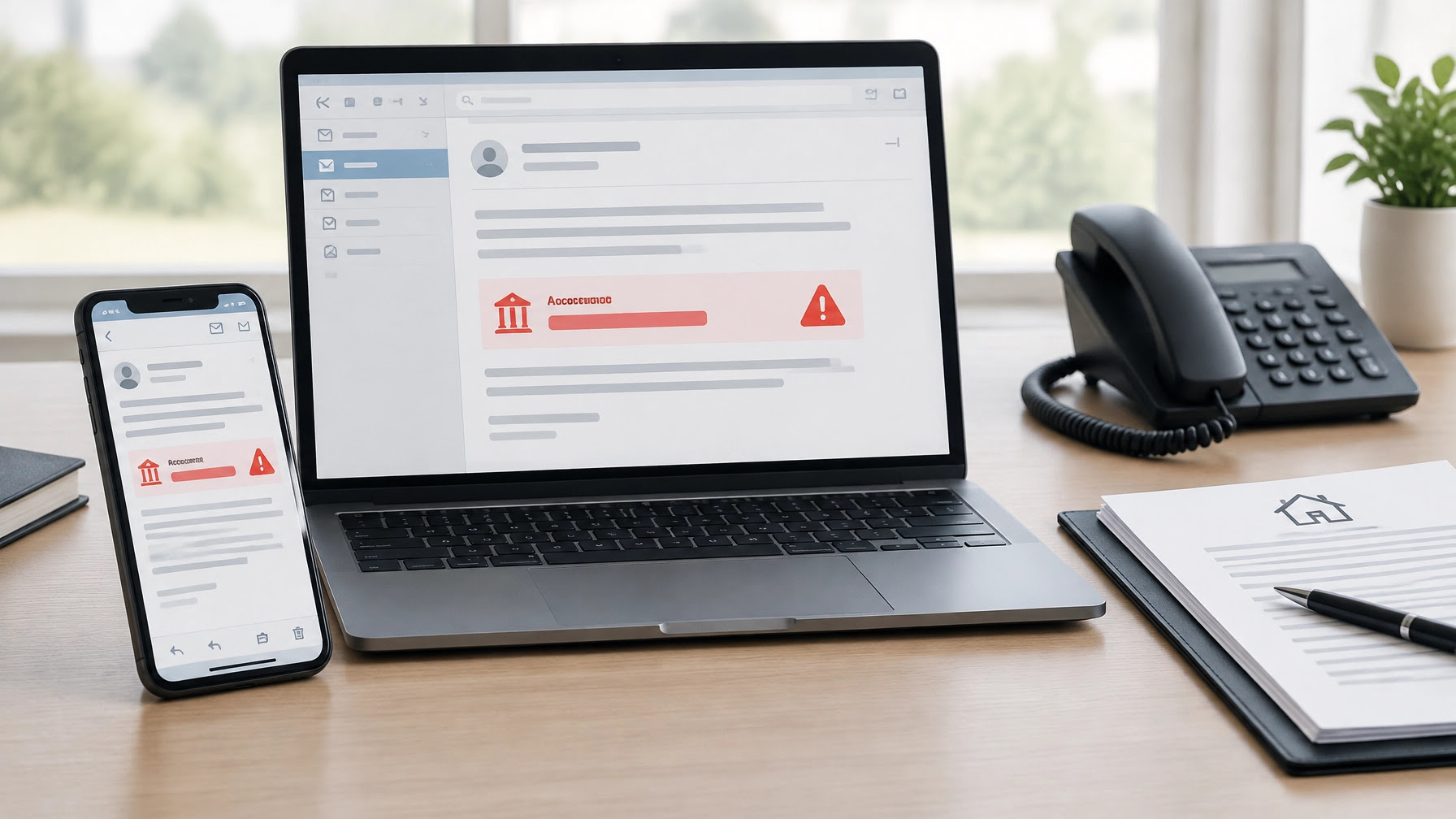
A real estate wire scam often arrives just before a deadline. A criminal may spoof or compromise the email account of an agent, title company, attorney or lender, then send convincing instructions to wire earnest money or closing funds to a fraudulent account. The message may look routine, and it may arrive in an existing email thread. If the money reaches the wrong account, recovery can be difficult.
The FBI’s Internet Crime Complaint Center (IC3) has warned about business email compromise and real estate wire fraud. Its practical advice is to verify payment changes through a second, independent channel, not email alone.
Use this protocol whenever you’re asked to wire money:
- Call a number you find independently. Use a number from previously verified paperwork or the organization’s official website, not a number in the email with the wiring instructions.
- Confirm every detail verbally. Read back the recipient and account information before sending.
- Treat last-minute changes as suspicious. Stop and verify any message changing the account, recipient, payment method or destination. Legitimate parties rarely need to change instructions at the last minute.
- Confirm receipt. Call the title or escrow company using the verified number after the wire is sent.
If you sent money to a suspected fraudulent account, contact your bank immediately and request a wire recall or other available recovery action. Then report the incident to IC3.gov and local law enforcement. Speed matters: funds can move quickly. Save emails, phone numbers, payment confirmations and other records, and follow your bank’s instructions.
3. Fake rental listings using real local homes
Rental scammers may copy photos, descriptions or virtual tours from a real home listing, then repost them with their own contact details. They may ask for application fees, a deposit or the first month’s rent, even though they don’t own the property and have no authority to rent it.
The danger is not just losing money. Imagine arriving with a moving truck, expecting keys, and finding the owners or existing tenants still living there. Ohio renters have encountered versions of this situation: Dayton-area reporting describes a couple who believed they had secured an apartment, then faced being told they could not stay. The Federal Trade Commission’s rental-scam guidance explains how copied listings can be used to deceive people searching online.
Verify the person’s authority before paying
Before sending money or personal information:
- Look up the property owner in county property records. If a broker or manager is involved, confirm that relationship independently.
- Contact the listing brokerage using contact information you find on its official website, not just details in the ad.
- Tour the home in person with a verifiable owner, manager or licensed agent. If the contact says they are out of town and can’t arrange a legitimate showing, pause.
- Confirm who will sign the lease and that they have authority to rent the property.
- Don’t wire money or pay before you have verified the listing and lease authority. Use traceable payment methods and keep receipts.
A real address, convincing photos, a copied lease or a post on a familiar platform does not prove the advertiser is authorized to rent the home.
If your home’s photos are stolen
If you find your home’s photos in a fake listing, save screenshots, URLs, messages and the date you found them. Report the listing to the platform, alert your real estate agent, and report suspected fraud to local law enforcement and the FTC. If an agent’s listing photos were copied, the agent may be able to help document the original listing and request removal.
If you paid a scammer, contact your bank or payment provider promptly to ask whether the transaction can be stopped or disputed. Keep all communications and payment records, and report the incident to the platform and authorities.
Quick-reference checklist
Before listing or selling a property
- Verify ownership, identity and authority to sell.
- Don’t rush because someone insists on an immediate listing.
- Sign up for your county’s recording alerts if available.
Before wiring real estate funds
- Verify instructions by phone using a number you found independently.
- Stop and confirm any last-minute change.
- Call the title company to confirm receipt.
Before renting
- Check county ownership records and independently verify the broker or manager.
- Tour the property and confirm who has authority to sign the lease.
- Don’t pay until you’ve verified the listing and use a traceable payment method.
If you suspect fraud
- Stop the transaction and preserve messages, documents and payment records.
- Contact your bank immediately if money was sent.
- Notify the county recorder, local law enforcement, relevant platform and, for online or wire fraud, IC3.
- Consult a real estate attorney or other appropriate professional about your next steps.
For more Northeast Ohio buying and selling guidance, explore our buyer and seller resources or read our guide to earnest money in Ohio. When something doesn’t add up, slow down and verify through a source you locate yourself.
Summit County Offers a Free Alert That Flags Documents Recorded in Your Name
Frequently Asked Questions
What is deed fraud in Ohio?
Deed fraud happens when a criminal pretends to own a property and tries to sell it or transfer the title. Fraudsters often use forged documents or stolen identification. Vacant land, rental properties and homes owned by out-of-town owners are common targets.
How can Summit County homeowners get alerts about their property records?
The Summit County Fiscal Office offers a free Property Record Alert service. It emails subscribers when a document is recorded under their registered name. Residents can sign up through the county’s online alert portal.
What should I do if I wired closing money to a scammer?
Call your bank immediately and request a wire recall. Then report the crime at IC3.gov and to local police. Keep all emails, phone numbers and payment records.
How can I tell if a rental listing is fake?
Check county records to see who owns the property. Contact the brokerage through its official website and tour the home in person. Be cautious if the contact cannot meet you or pushes for payment before a showing.
Who should I contact about suspected real estate fraud in Summit County?
Start with the Summit County Fiscal Office Recorder Division at 330-643-2712. Report criminal activity to local police and consult a real estate attorney. Wire and online fraud can also be reported to the FBI’s IC3.
Content provided by:
Carly Sablotny
Team Leader at Milestone Property Group | KW Living
440-521-1704 carlysablotnyrealtor@gmail.com http://www.neohomepros.com/
