



A renovation changes a home one room at a time, yet demolition creates another project behind the scenes. Once old cabinets and flooring start leaving, homeowners may wonder where renovation debris goes after pickup and what happens before it reaches its final destination.
The answer varies by material and local disposal options. A contractor may send one load to a sorting facility while another heads directly toward a specialized processor. Knowing that path can help homeowners discuss cleanup costs before work begins and understand what happens after the dumpster leaves the driveway.
The Dumpster Is Usually the First Stop
A renovation container often serves as temporary storage, not the final destination. After pickup, a hauler may send contents to transfer stations or waste facilities. Mixed loads can include drywall, lumber, or broken tile. Facilities sort materials and direct recoverable items to proper streams.












Some accept specific materials separately, encouraging contractors to separate debris on-site. The destination depends on nearby facilities. Contractors should know which materials the local waste system accepts and where specialty debris goes.
For homeowners, those numbers put an ordinary dumpster into perspective. The broken drywall and old flooring from one kitchen may seem minor, but similar projects across thousands of homes create an enormous waste stream.










Concrete and Metal May Have Another Use
Heavy demolition materials can follow routes that look different from ordinary household trash.
Facilities can crush clean concrete and use the processed material as aggregate. The EPA identifies aggregate as the largest next-use destination within its 2018 construction and demolition debris estimates.
Scrap metal also has established recycling channels. Plumbing work or structural changes may produce metal that contractors can separate before the main debris load leaves the property.
Separation becomes easier when the project plan accounts for it early. Tossing every material into one container may limit later options, depending on the hauler and receiving facility.
Homeowners don’t need to direct this process themselves. Asking how the contractor handles concrete or metal can still provide useful insight into the cleanup plan, especially during larger projects involving driveways, foundations, plumbing, or structural work.
Wood Creates a More Complicated Waste Stream
Wood sounds simple until renovations reveal various forms. Good-condition solid lumber can be reused, but painted or treated wood may need special disposal. Engineered products with adhesives affect disposal.
Cabinet removal is complex, with solid-wood doors and composite boxes. Shop waste like offcuts and sawdust varies by material. Contractors may separate usable wood before debris falls into a container.
Salvage businesses may accept certain cabinetry or trim if condition and demand favor reuse. Homeowners wanting to preserve cabinetry should request this before demolition, as careful removal requires a different approach than quick tearing.
Condition matters: sturdy cabinets or solid-wood doors might be worth saving, but water-damaged or heavily modified materials often lack reuse value.
Drywall and Tile Follow Their Own Paths
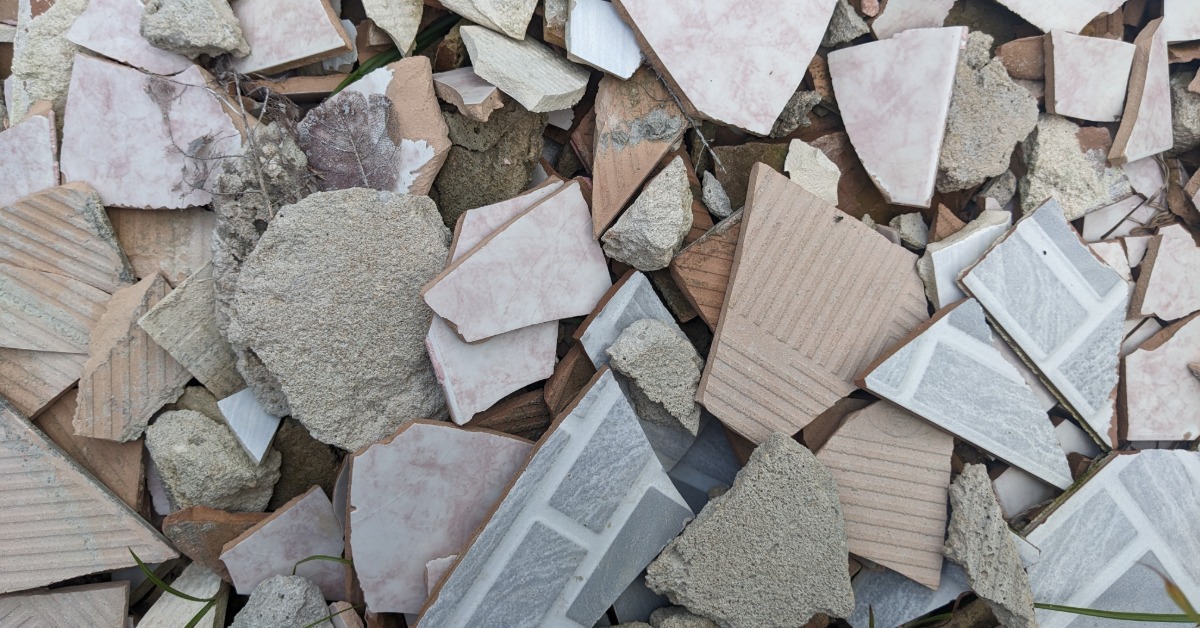
Bathroom and kitchen renovations can generate large amounts of drywall or tile even when the project covers a modest area. Tile presents another challenge because removal can leave mortar or backing material attached. That mixture may affect which facility will accept it.
Homeowners planning extensive wall changes should ask how the contractor calculates debris volume. A project that looks manageable inside the room can fill a container faster than expected once drywall comes down.
Heavy debris can also affect hauling costs. Tile, masonry, and similar materials add substantial weight without taking up much space, so a half-full container isn’t necessarily cheap to remove.
Some Materials Need a Different Plan
Renovation debris can include products that shouldn’t join the general construction pile.
Leftover paints or solvents may require separate disposal under local rules. Older homes can also contain materials that call for professional assessment before demolition starts.
Contractors should address questionable materials during the planning phase rather than after workers begin opening walls or removing finishes.
That conversation becomes especially important during projects involving older construction. Homeowners shouldn’t assume every material can go into the same dumpster simply because it came out of the same room.
If a contractor identifies something that requires different handling, homeowners should ask how that affects the schedule and cost. Getting that information early makes it easier to account for an extra disposal step without throwing the rest of the renovation plan off course.
Disposal Costs Belong in the Early Budget
Dumpsters rarely appear on inspiration boards, yet they can affect the renovation budget.
A contractor may include hauling and disposal in the overall estimate. Another may list container rental or disposal charges separately. Weight can also influence pricing when a project generates heavy debris.
Questions to Ask Before Demolition
A short conversation can clarify the plan:
- Who arranges the debris container?
- Which disposal charges appear in the estimate?
- Will the crew separate reusable materials?
- Which debris needs special handling?
- Could extra container pickups add to the final cost?
Those answers can also reveal how well the contractor has mapped the demolition phase. Cleanup works best when it’s part of the project plan, not a problem at the end.
Homeowners should also ask where the container will sit. Driveway access, neighborhood rules, available space, and the route workers use to carry debris out of the house can affect placement.
Salvage Can Start Before the Dumpster Arrives
Some of the easiest material to divert from disposal never reaches the container.
Cabinets in good condition may work elsewhere in the home. Doors or hardware can sometimes interest salvage businesses, depending on condition and demand.
Fixtures deserve a similar review before removal. A working item may have resale or donation potential even when it no longer suits the renovation.
Salvage does require planning. Contractors need to know which items homeowners want to preserve because careful removal may take longer than standard demolition.
That extra conversation can make sense when the material has genuine reuse value. Saving damaged pieces simply because throwing them away feels wasteful may create another storage problem instead.
Homeowners can decide what they want to keep before the crew arrives. Marking those items or discussing them during a pre-demolition walkthrough reduces confusion once work gets underway.
Follow the Debris Beyond the Property
Homeowners naturally focus on what will enter the finished space. Cabinets and flooring deserve that attention, yet demolition deserves a plan as well.
Knowing where remodeling debris goes once it leaves the property helps homeowners understand disposal fees and ask more informed questions before work starts. It can also reveal which materials may have another useful destination before landfill disposal becomes the default.
A contractor who can explain that process clearly offers a fuller picture of how the renovation will run. Homeowners don’t need to become waste experts themselves. They need enough information to understand the cleanup plan, what it may cost, and which materials require extra attention.
The dumpster may leave quickly, but good project planning accounts for what happens after it turns the corner.
